pannacotta receta is the method I use when I want panna cotta that quivers on the plate, tastes distinctly of vanilla and cream, and melts before it ever feels rubbery. The critical point is not simply mixing cream, sugar, and gelatin; it is controlling the gelatin concentration, heating only as much as necessary, and chilling long enough for the protein network to set without becoming tight. This pannacotta receta uses 500 milliliters of total dairy with 5 grams of powdered gelatin, a ratio that gives a clean unmold while keeping the texture tender. Heavy cream provides richness, whole milk lightens the mouthfeel, and a small amount of salt sharpens the vanilla rather than making the dessert taste salty.
The technique matters because gelatin behaves differently from starch or egg custard. Boiling does not make panna cotta thicker; excessive heat can weaken gelatin, flatten fresh dairy flavor, and create a cooked-cream aroma. For this pannacotta receta, I warm the dairy only until steam rises and tiny bubbles gather at the rim, roughly 75 to 80°C, then dissolve bloomed gelatin off the heat. That temperature is hot enough to dissolve sugar and gelatin completely but low enough to protect the clean flavor. Straining the mixture removes vanilla fibers and any stubborn gelatin particles, while a brief rest before pouring reduces surface foam and gives the finished custard a polished top.
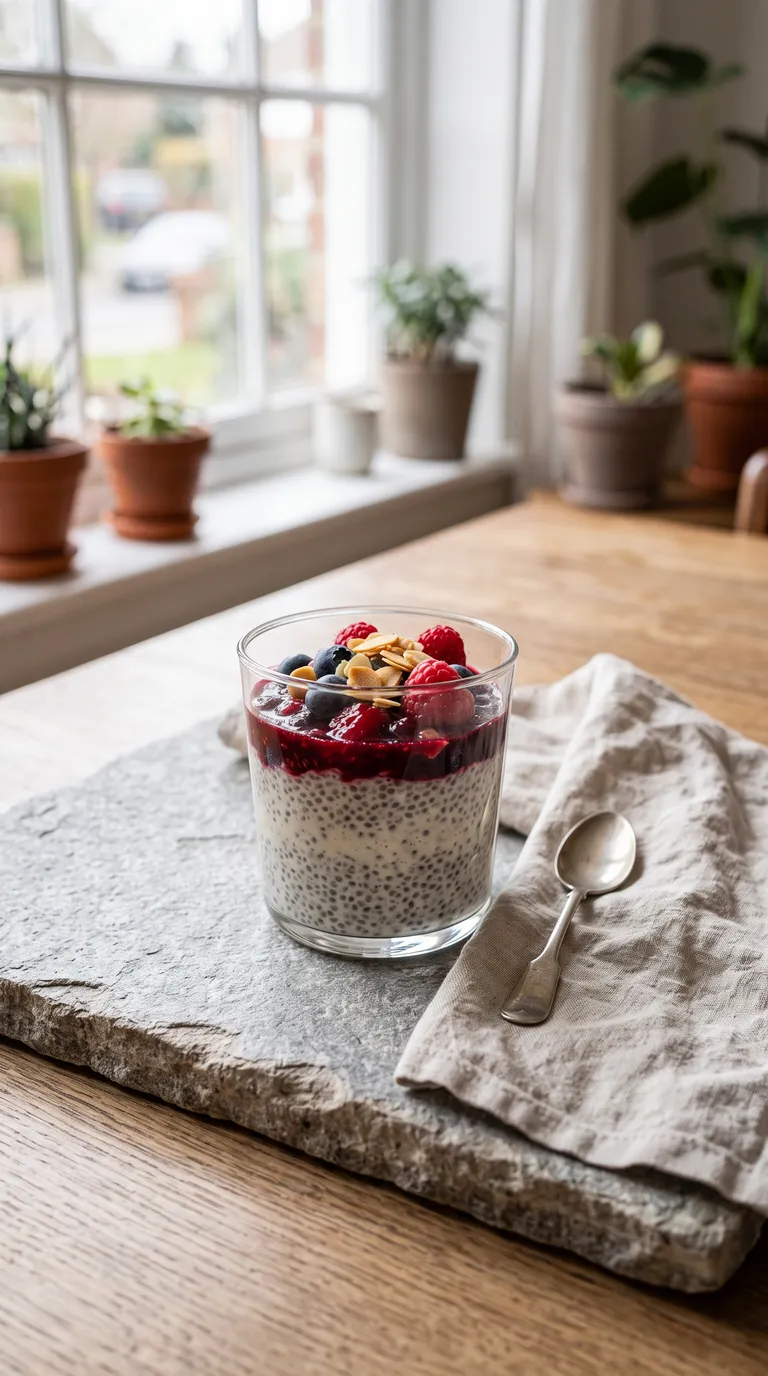
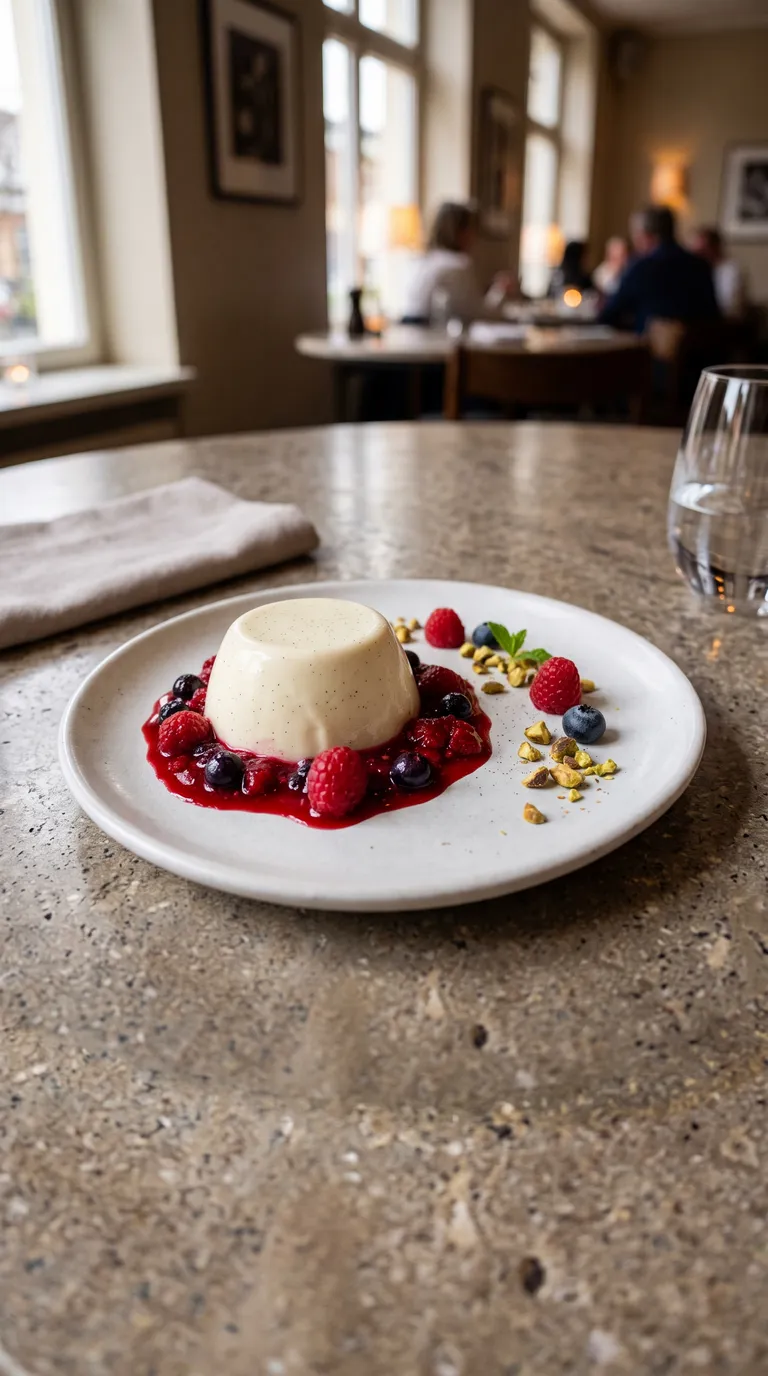
A tart berry compote is included because panna cotta needs contrast more than it needs extra sweetness. The berries are cooked just until they release juice and thicken lightly, then cooled so their acidity stays vivid. Serve the panna cotta directly in glasses for the softest possible set, or chill it in lightly oiled molds and unmold it for a more formal presentation. Either way, this pannacotta receta is built around measurable cues: a gentle wobble, a smooth cut surface, no gummy resistance, and enough acidity on the plate to keep each spoonful balanced.
What I Learned Refining This Panna Cotta
When I tested this exact pannacotta receta, the cue I trusted most was not the clock but the change at the edge of the saucepan. At first the cream and milk looked completely flat and opaque; after several minutes over medium-low heat, a thin necklace of bubbles formed against the metal and a faint ribbon of steam rose when I stirred. The vanilla smelled floral rather than cooked, and the sugar had stopped making that faint sandy sound against the bottom of the pan. I took the dairy off the heat at that point, before a simmer, because the clean sweetness of the cream was noticeably better than in batches that had been allowed to bubble.
My first trial of this pannacotta receta was too firm. I used a full 7-gram packet of powdered gelatin for 500 milliliters of dairy, and the result unmolded beautifully but resisted the spoon like a soft gummy candy. The flavor was right, yet the texture lingered on the tongue instead of melting. I corrected it by dropping the gelatin to 5 grams and blooming it in six times its weight of cold water. That smaller dose still held a neat shape after four to six hours in the refrigerator, but the panna cotta trembled when I nudged the plate and collapsed smoothly under light pressure from the spoon.
I also learned that foam is a surprisingly important detail. Vigorous whisking traps air, and those bubbles rise into a pitted layer that makes an otherwise careful dessert look rough. Now I stir with a flexible silicone spatula rather than beating the mixture, then pass it through a fine-mesh sieve into a pouring jug and let it stand for about three minutes. In the finished pannacotta receta, the surface is glossy and level, the interior is porcelain-smooth, and the spoon enters without tearing or leaving a watery trail.
The berry compote changed during testing too. A long cook produced something closer to jam, which buried the delicate vanilla and made the plate feel heavy. I now cook the berries only until about half have burst and the liquid lightly coats the back of a spoon, usually four to six minutes, then cool them completely before serving. That gives the pannacotta receta the contrast I want: cold, soft cream; bright fruit acidity; a few intact berries; and a sauce loose enough to run around the base rather than sit on top like preserves.
Prep Time: 15 minutes | Cook Time: 10 minutes, plus at least 4 hours chilling | Servings: 4
Ingredients
- 400 ml heavy cream (35% fat)
- 100 ml whole milk
- 60 g granulated sugar
- 1 teaspoon vanilla bean paste, or seeds from 1/2 vanilla bean
- 1 small pinch fine sea salt
- 5 g powdered gelatin, ideally about 200 bloom
- 30 g cold water, for blooming the gelatin
- 150 g mixed berries, fresh or frozen
- 15 g granulated sugar, for the berry compote, plus more only if the fruit is very tart
- 1 teaspoon fresh lemon juice
Instructions
- Bloom the gelatin: place 30 g cold water in a small bowl and sprinkle the 5 g powdered gelatin evenly over the surface. Leave it undisturbed for 5 to 10 minutes, until fully swollen with no dry granules visible.
- Warm the dairy: combine the heavy cream, whole milk, 60 g sugar, vanilla, and salt in a heavy-bottomed saucepan. Heat over medium-low, stirring gently with a silicone spatula, until the sugar dissolves and the mixture reaches about 75 to 80°C; look for steady steam and a ring of tiny bubbles at the edge, but do not let it boil.
- Dissolve the gelatin: remove the pan from the heat, wait about 20 seconds, then add the bloomed gelatin. Stir slowly for 30 to 60 seconds, until the gelatin disappears completely and the mixture feels perfectly smooth.
- Strain and settle: pass the mixture through a fine-mesh sieve into a pouring jug. Let it stand for 2 to 3 minutes so trapped air rises, then skim off any visible foam with a spoon.
- Portion and chill: divide the mixture among four 120 to 150 ml glasses or lightly oiled molds. Place on a level refrigerator shelf; chill uncovered for 20 to 30 minutes, then cover and continue chilling for at least 4 hours, preferably 6 hours or overnight.
- Make the compote: combine the berries, 15 g sugar, and lemon juice in a small saucepan. Cook over medium heat for 4 to 6 minutes, stirring gently, until about half the berries have burst and the juices lightly coat the back of a spoon. Cool completely, then refrigerate separately.
- Check the set: nudge one portion before serving. The center should move in one soft wave rather than slosh like liquid or bounce like firm jelly. If serving in glasses, let the panna cotta stand at cool room temperature for about 10 minutes before adding compote.
- Unmold if desired: dip the outside of each mold in warm water for 3 to 5 seconds, dry it, loosen the top edge with a damp fingertip, place a cold plate over the mold, and invert. Repeat with a 2-second warm-water dip if it does not release; do not run a knife deeply around the sides.
- Finish and serve: spoon the cold berry compote beside or lightly over the panna cotta. Add a few fresh berries or a small amount of toasted nuts if desired, keeping the garnish restrained so the vanilla cream remains the main flavor.
Why This Pannacotta Receta Works
The reason this pannacotta receta works is that the gelatin ratio is designed around the amount of water and fat in the dairy, not around a convenient packet size. Five grams of roughly 200-bloom powdered gelatin for 500 milliliters of cream and milk gives enough structure for a gentle unmold without turning the dessert elastic. Gelatin forms a three-dimensional network as it cools, trapping liquid between protein strands. Too much gelatin makes that network dense and chewy; too little leaves a pudding that slumps. Because brands vary in bloom strength, weighing gelatin is more reliable than counting teaspoons.
The dairy balance matters just as much. Using only heavy cream can make a panna cotta taste almost buttery when it is served very cold, because fat dulls aroma and coats the palate. In this pannacotta receta, 400 milliliters of cream are cut with 100 milliliters of whole milk. The milk lowers the total fat just enough to make vanilla easier to smell and the texture cleaner, while the cream still supplies the rounded mouthfeel associated with classic panna cotta. If your cream is exceptionally rich, around 40 percent fat, increasing the milk slightly can keep the dessert from feeling heavy.
Temperature control protects both flavor and structure. Gelatin does not need a rolling boil to dissolve; once it has fully hydrated in cold water, it melts readily in hot liquid. I keep the dairy around 75 to 80°C, where sugar dissolves quickly and vanilla extracts efficiently without developing a scalded flavor. In a pannacotta receta, boiling is especially pointless because there is no egg protein to cook and no starch to gelatinize. Removing the pan from the heat before adding the bloomed gelatin also reduces the risk of prolonged high heat weakening the setting power.
The final reason this pannacotta receta feels restaurant-quality is contrast. A soft dairy dessert needs acidity and temperature discipline, not a pile of sugar. The berry compote is intentionally loose and tart, so a teaspoon of sauce cuts through the cream instead of masking it. The panna cotta should be served cold but not refrigerator-hard; ten minutes at cool room temperature lets the fat soften slightly, which makes the vanilla more aromatic and the texture more fluid on the tongue. That small serving adjustment changes the perception of the entire dessert without changing a single ingredient. The set should relax at the edges while the center still holds, a useful visual cue that the gelatin network is tender rather than overbuilt.
Key Ingredients and Smart Substitutions for Pannacotta Receta
The ingredient list for a classic pannacotta receta is short, so quality differences show immediately. Heavy cream should taste fresh and sweet, with no cooked or cardboard note. Whole milk lightens the cream without making the set watery. Granulated sugar dissolves cleanly and contributes sweetness without adding another flavor. Vanilla bean paste is practical because it gives both aroma and visible seeds, but a split vanilla bean is even more fragrant. A small pinch of fine sea salt is not decorative; it suppresses flat sweetness and makes the vanilla seem fuller.
Gelatin is the ingredient that deserves the most attention. For this pannacotta receta, 5 grams of powdered gelatin at about 200 bloom is the target. Sprinkle it evenly over 30 grams of cold water and leave it undisturbed for five to ten minutes, until every granule looks swollen and the mixture resembles a firm gel. If using sheet gelatin, use enough sheets to provide roughly the same setting power, because sheet sizes and bloom strengths vary by brand. Soak sheets in plenty of cold water, squeeze them gently, and stir them into the hot dairy off the heat.
Substitutions can work, but they change more than flavor. Half-and-half can replace the cream and milk blend, although the pannacotta receta will taste lighter and may feel slightly less luxurious. Coconut milk can replace dairy for a different dessert, but full-fat canned coconut milk is preferable because low-fat versions often separate and give a thin mouthfeel. Plant-based alternatives do not behave identically with gelatin, and gelatin itself is animal-derived. For a vegetarian set, agar can be used, but it creates a more brittle, clean-breaking gel and must be boiled to activate, so it is not a direct one-for-one substitution.
The berries are deliberately flexible. Raspberries, strawberries, blackberries, blueberries, or a frozen mixed-berry blend all work, but each needs a slightly different balance of sugar and lemon. Tart raspberries may need a little more sugar, while ripe strawberries may need more lemon juice to stay lively. Frozen berries release more water, so the compote may need one or two extra minutes of simmering. Whatever fruit you choose, cool it fully before spooning it over the pannacotta receta; warm sauce softens the gelatin at the surface and can make an otherwise clean unmold look melted.
For the best flavor, avoid artificial vanilla if you can; panna cotta has nowhere to hide a harsh alcohol or candy-like aroma. If vanilla extract is your only option, add it after the pan comes off the heat so its volatile aromas are not driven away. Lemon zest is optional, but use only a thin strip without white pith and remove it before pouring. Those small choices keep the pannacotta receta clean, floral, and dairy-forward rather than perfumed or bitter.
Step-by-Step Pannacotta Receta Technique
A precise pannacotta receta starts with blooming the gelatin correctly. Put 30 grams of cold water in a small bowl, then rain the powdered gelatin over the entire surface instead of dropping it in one mound. Leave it for five to ten minutes without stirring. Properly bloomed gelatin should look uniformly swollen, with no dry white islands. If dry granules remain, they can survive the hot dairy as tiny rubbery beads. Blooming gives each particle time to absorb water before heat melts the protein chains into the cream.
Combine the heavy cream, milk, sugar, vanilla, and salt in a small heavy-bottomed saucepan. Heat over medium-low, stirring slowly with a silicone spatula and scraping the base so sugar cannot settle and scorch. For this pannacotta receta, stop heating when you see a thin ring of tiny bubbles around the edge and steady steam above the pan, ideally 75 to 80°C on an instant-read thermometer. Do not boil. Pull the pan off the burner, wait about 20 seconds, add the bloomed gelatin, and stir gently until no visible gel remains.
Straining is not a fussy restaurant ritual; it solves three practical problems. Pour the mixture through a fine-mesh sieve into a jug to catch vanilla pod fibers, undissolved gelatin, and any skin that may have formed on the dairy. Then let the pannacotta receta mixture stand for two to three minutes so surface bubbles rise. Skim obvious foam with a spoon rather than whisking it back in. If using glasses, pour down the side of each glass to reduce bubbles. If using molds, lightly coat only the thinnest film of neutral oil and wipe away any visible excess.
Chill the portions on a level refrigerator shelf, uncovered for the first 20 to 30 minutes so condensation does not drip onto the surface, then cover once they are cool. A shallow four-ounce mold may set in about four hours, but six hours gives the gelatin network more time to stabilize. For the cleanest result, make the pannacotta receta the day before serving. To test the set, nudge the mold: the center should move as one soft wave, not slosh like liquid and not bounce like jelly. That controlled wobble is a better doneness cue than a rigid clock time.
For unmolding, dip only the outside of the mold in warm water for three to five seconds, keeping water away from the panna cotta itself. Dry the mold, loosen the upper edge with a damp fingertip, place a cold plate on top, and invert in one confident motion. If it does not release, repeat the warm-water dip for two seconds rather than forcing a knife around the sides. The goal is to melt the microscopic outermost layer, not warm the whole dessert. That technique preserves the satin surface that makes this pannacotta receta look professionally finished.
Common Pannacotta Receta Mistakes and How to Fix Them
The most common failure in a pannacotta receta is a set that is too firm. If the panna cotta feels bouncy, cuts with sharp rubbery edges, or clings to the spoon instead of melting, the gelatin concentration is too high for your dairy or your gelatin is stronger than expected. Next time, reduce the gelatin by about 10 to 15 percent rather than changing the cream. If you have not yet poured the mixture, you can also dilute an over-gelatinized warm base with a measured amount of additional hot dairy, then taste again for sweetness before chilling.
A panna cotta that refuses to set usually comes from the opposite problem: too little gelatin, gelatin that was not properly bloomed, or excessive heat after the gelatin was added. Give the dessert a full six hours before judging it, because a warm refrigerator or deep mold can delay setting. If the pannacotta receta is still loose after an overnight chill, gently rewarm the mixture just enough to liquefy it, bloom a small additional amount of gelatin separately, dissolve it off the heat, and rechill. Avoid boiling during the rescue, because repeated hard heating can reduce gelatin strength.
Graininess and tiny lumps point to poor hydration or incomplete dissolution. Powdered gelatin should be sprinkled over cold water, not added directly to hot cream, where the outside of each granule can set before the center hydrates. If you see translucent flecks in the saucepan, keep stirring gently off the heat for another 30 to 60 seconds, then strain. A pannacotta receta with a foamy top has a different cause: too much whisking. Switch to a spatula, pour from a low height, and skim bubbles before chilling. Surface foam does not ruin flavor, but it makes unmolded portions look porous.
Separation can happen when the mixture is poured while very hot or when flavorings contain a lot of free water, alcohol, or acidity. Vanilla seeds may also sink if the base is extremely fluid. Let the strained mixture cool for several minutes, stirring once or twice, until it feels warm rather than hot before pouring. For fruit-flavored panna cotta, never add a large quantity of raw acidic puree without adjusting the total liquid and gelatin. Pineapple, kiwi, papaya, and fresh figs contain proteolytic enzymes that can weaken gelatin; cooking those fruits first deactivates the enzymes and protects the pannacotta receta set.
Finally, water beads on the surface are usually condensation, not a broken dessert. Let the portions cool briefly before covering, and use lids or wrap that do not touch the top. If an unmolded panna cotta weeps noticeably, it may have been frozen, stored too long, or set with an unstable ratio. Blot a few droplets carefully with the corner of a paper towel rather than rubbing the surface. Good troubleshooting is mostly about identifying which stage failed: hydration, heating, concentration, chilling, or storage. Once you isolate that stage, a pannacotta receta is remarkably predictable.
Variations and Adaptations Without Losing the Silky Set
Once the base technique is reliable, a pannacotta receta is easy to adapt because the dairy acts as a neutral carrier for aromatic ingredients. Coffee is one of the cleanest variations: steep 10 to 12 grams of coarsely crushed coffee beans in the hot cream for ten minutes, strain, then continue with the gelatin. Whole beans give a rounded roasted aroma without the muddy color of brewed coffee. For espresso flavor, replace no more than about 40 milliliters of the milk with cooled espresso and keep the total liquid volume unchanged so the set remains predictable.
Citrus also works well, but zest is safer than juice in the dairy base. Add two broad strips of lemon, orange, or mandarin peel to the warming cream, avoiding the bitter white pith, then remove them before adding gelatin. If you want stronger acidity, put citrus in the sauce rather than pouring a large amount of juice into the pannacotta receta. Acid does not automatically destroy gelatin, but extra juice changes water content and can make the flavor seem thin. Blood orange segments, roasted apricots, or poached pears are especially good with vanilla because they provide acidity without overwhelming the cream.
Chocolate requires a ratio adjustment because cocoa solids and cocoa butter change texture. For a dark-chocolate version, add about 70 grams of finely chopped 65 to 70 percent chocolate to the hot dairy, stirring until fully emulsified, and consider reducing the sugar by 10 to 15 grams. The finished pannacotta receta will feel denser even with the same gelatin, so reducing gelatin slightly can preserve the characteristic wobble. White chocolate is sweeter and contains more cocoa butter, so it needs even less added sugar. Always strain after the chocolate is fully melted to catch any unmelted fragments.
For a dairy-free direction, full-fat coconut milk paired with coconut cream gives enough body to make the dessert satisfying, but the flavor is no longer classic panna cotta. Gelatin still works with coconut, while agar is the common vegetarian alternative. Agar must be brought to a boil to hydrate properly and sets much more firmly at room temperature, producing a short, brittle bite rather than gelatin’s melting tenderness. If adapting this pannacotta receta with agar, treat it as a separate formulation and test the amount by weight; blindly swapping equal grams of agar for gelatin will almost certainly produce a block that is too firm.
Herbs and spices can be subtle if they are infused rather than ground directly into the cream. Toasted cardamom pods, a short cinnamon stick, fresh mint, basil, or a small sprig of rosemary can steep in the hot dairy for five to fifteen minutes depending on intensity. Taste every few minutes, because warm cream extracts aromatic oils efficiently and can turn rosemary medicinal or cardamom dominant faster than expected. Strain before adding the bloomed gelatin. The best variation still tastes like panna cotta first; the added flavor should arrive after the cream, not erase it.
Storage, Make-Ahead, Freezing, and Reheating
A finished pannacotta receta is an excellent make-ahead dessert because gelatin continues to stabilize during the first several hours of refrigeration. For the best balance of texture and freshness, prepare the panna cotta 12 to 24 hours before serving. Keep each portion covered once fully cool so refrigerator odors cannot migrate into the dairy. If you are serving in glasses, the dessert can stay in the same vessel from chilling to table. If you plan to unmold it, leave it in the mold until shortly before serving; the mold protects the surface from drying and accidental damage.
Three days is a practical upper limit for best quality in a home refrigerator held at 4°C or below. The pannacotta receta may remain safe beyond that depending on handling and ingredient freshness, but the texture slowly becomes less elegant as gelatin tightens and the surface can begin to weep. Store the berry compote separately in a clean covered container. Its acid and sugar help it keep well, but separation is still useful because fruit juices can stain the white panna cotta and soften the outer layer where they sit in prolonged contact.
Freezing is possible, but it is not my preferred method for this pannacotta receta. Ice crystals can disrupt the gel network and encourage syneresis, which is the release of water after thawing. A high-fat panna cotta may survive freezing better than a low-fat one, yet even a successful thaw can lose the satin-smooth texture that makes the dessert worthwhile. If freezing is unavoidable, freeze in individual molds, wrap tightly, thaw slowly overnight in the refrigerator, and serve in the mold or glass rather than relying on a flawless unmold.
Reheating only makes sense before the panna cotta has been served, usually when correcting a setting problem or repouring the batch. Use very gentle heat, preferably a bowl over warm water or a saucepan on the lowest setting, and stop as soon as the gel liquefies. Do not simmer. Once melted, the pannacotta receta can usually be reset because gelatin is thermoreversible, meaning it can melt and gel again. Repeated heating, however, gradually damages quality, especially if the mixture gets hot enough for long enough to weaken the gelatin or develop cooked dairy flavors.
When transporting panna cotta, chill it completely before moving it and keep it below 5°C in an insulated carrier with cold packs. Glass portions are much safer for travel than unmolded portions because lateral movement can tear a tender gel. Add compote and delicate garnishes at the destination, not before the journey. For service, take the panna cotta from the refrigerator about ten minutes before eating. That brief tempering softens the milk fat and releases more vanilla aroma while the gel remains intact, giving the pannacotta receta its best texture without any actual reheating.
Serving Suggestions, Pairings, and Restaurant-Style Plating
Serving a pannacotta receta well is mostly an exercise in contrast. The panna cotta itself is cold, creamy, pale, and gently sweet, so the plate benefits from something acidic, something fresh, and, if desired, one crisp element. The berry compote in this recipe supplies both acidity and color. Spoon it beside or around an unmolded panna cotta rather than burying the top, so guests can control how much fruit they take with each bite. If serving in a glass, add only a thin layer of compote just before service so the visual boundary between cream and fruit stays clean.
Texture matters as much as flavor. A few toasted sliced almonds, pistachios, or hazelnuts give a crisp counterpoint, but keep the quantity restrained; panna cotta should still feel soft and delicate. A thin almond tuile or a small butter cookie works for the same reason. Avoid heavy cake cubes or thick granola, which dominate the spoonful and make the pannacotta receta feel more like a layered parfait. If using nuts, toast them until fragrant and just golden at the edges, then cool them completely so residual heat does not soften the panna cotta.
Fruit pairings should follow the season. Strawberries and raspberries bring bright acidity in spring and summer, while roasted plums, poached pears, figs, or citrus segments suit cooler months. In every case, taste the fruit before sweetening it. A ripe peach may need only lemon juice, while sharp blackberries may need a spoonful of sugar. This pannacotta receta is already balanced on the sweet side of neutral, so the garnish should usually be less sweet than the cream. That difference is what keeps the final bites from becoming cloying.
Beverage pairings work best when they echo the dessert without doubling its richness. Espresso is excellent because bitterness resets the palate after each creamy spoonful. Unsweetened black tea, jasmine tea, or lightly roasted oolong can do the same. For a non-caffeinated option, sparkling water with a strip of lemon peel keeps the finish clean. If the pannacotta receta is flavored with coffee, chocolate, or citrus, choose a drink that supplies contrast rather than more of the same flavor. A chocolate version, for example, benefits more from tart berries and coffee than from another creamy accompaniment.
Finally, pay attention to plate temperature and portion size. A cold plate helps an unmolded panna cotta hold its shape during service, especially in a warm kitchen. Four portions from this batch are intentionally modest because rich dairy is more enjoyable when the final spoonful still feels welcome. If you want a dramatic restaurant presentation, use a wide shallow plate, position the panna cotta slightly off-center, place compote in a loose crescent, and add one crisp garnish. The visual restraint suits the texture: a good pannacotta receta should look as calm and precise as it feels on the spoon.
Frequently Asked Questions
Why is my panna cotta too firm and rubbery?
A rubbery panna cotta almost always means the gelatin concentration is too high for the amount of liquid or the gelatin is stronger than the recipe assumes. In this pannacotta receta, 5 g of roughly 200-bloom powdered gelatin sets 500 ml of dairy softly enough to wobble and melt on the tongue. If your brand is unusually strong, reduce it by about 10 percent next time. Also avoid judging the texture straight from a very cold refrigerator; ten minutes at cool room temperature softens the dairy fat and makes the set feel more tender.
How long does panna cotta need to set in the refrigerator?
Most individual portions need at least four hours, but six hours is more reliable and overnight chilling gives the most stable texture. A deep mold, a warm refrigerator, or a very soft pannacotta receta can require longer because the center cools slowly. Test by nudging the mold rather than pressing the surface: the dessert should move as one gentle wave, with no liquid sloshing at the center. Do not freeze it just to speed the process, because rapid freezing can later cause water to separate from the gel.
Can I make pannacotta receta without heavy cream?
You can replace the cream-and-milk blend with half-and-half or another moderately rich dairy mixture, but the mouthfeel will be lighter and less rounded. The pannacotta receta still needs enough fat to carry vanilla aroma and keep the gel from tasting like plain milk jelly. If you switch to a much lower-fat liquid, keep the total volume the same and expect the set to feel firmer even with the same gelatin amount. Full-fat coconut milk is another option, although it changes the flavor and turns the dessert into a coconut variation rather than classic panna cotta.
Can I use sheet gelatin instead of powdered gelatin?
Yes, but match setting strength rather than simply counting sheets because sheet size and bloom strength vary between manufacturers. For this pannacotta receta, the powdered gelatin target is 5 g at about 200 bloom, so choose an equivalent amount according to the package information for your sheets. Soak the sheets in plenty of cold water until flexible, squeeze them gently, and dissolve them in the hot dairy off the heat. The same rule applies as with powder: once the gelatin is added, avoid prolonged boiling.
Why did my panna cotta separate into layers?
Layering usually happens when the mixture is poured while very hot, when a watery flavoring changes the balance, or when solids such as vanilla seeds settle before the gel begins to form. After straining this pannacotta receta, let the mixture rest for a few minutes and stir once gently before pouring so its temperature drops slightly. Very acidic fruit purees, alcohol, or large amounts of juice should be treated as part of the total liquid rather than added casually. If the separation is only vanilla seeds, cooling the base slightly before portioning usually solves it.
Can panna cotta be made vegetarian?
Traditional gelatin is animal-derived, so a vegetarian pannacotta receta needs a different gelling agent such as agar. Agar is not a direct substitute because it must be boiled to activate and produces a firmer, more brittle gel that does not melt on the tongue like gelatin. Start with a formulation specifically designed for agar and weigh it precisely, because a small excess can make the dessert blocky. The flavor can remain excellent, but the texture should be judged on its own terms rather than expected to mimic gelatin perfectly.
Can I freeze panna cotta?
You can, but freezing is not ideal if the goal is the smoothest possible texture. Ice crystals can damage the gelatin network in a pannacotta receta, and thawing may cause syneresis, meaning small beads of water separate from the gel. If you must freeze it, use individual molds or glasses, cover tightly, and thaw slowly overnight in the refrigerator. Serve it in the container if appearance matters, because a thawed panna cotta may not unmold as cleanly as one that has only been refrigerated.
How do I unmold panna cotta without breaking it?
Chill the dessert fully first, then dip only the outside of the mold in warm water for three to five seconds. Dry the mold, loosen just the top edge with a damp fingertip, place a cold serving plate over it, and invert in one confident movement. If the pannacotta receta does not release, give the mold another two-second dip rather than forcing a knife around the sides. The goal is to melt only the microscopic outer layer, because warming the entire dessert makes the sides slump and dulls the clean shape.
What fruit goes best with vanilla panna cotta?
Tart fruit works best because panna cotta is rich, cold, and gently sweet. Raspberries, blackberries, strawberries with lemon, passion fruit, blood orange, roasted plums, and poached pears all give this pannacotta receta useful acidity and aroma. Taste the fruit before adding sugar; the sauce should usually be less sweet than the cream so each spoonful has contrast. Avoid very thick jam as the main topping, because its concentrated sugar can flatten the delicate vanilla and make the dessert feel heavy.
Can I make panna cotta two days ahead?
Yes. In fact, making this pannacotta receta one or two days ahead is useful because the gelatin has plenty of time to stabilize and the dessert is completely cold before service. Keep each portion covered after it has cooled, and store the berry compote separately so its color and acidity do not seep into the creamy surface. For best texture, serve within about three days and let the panna cotta stand for roughly ten minutes out of the refrigerator before eating.